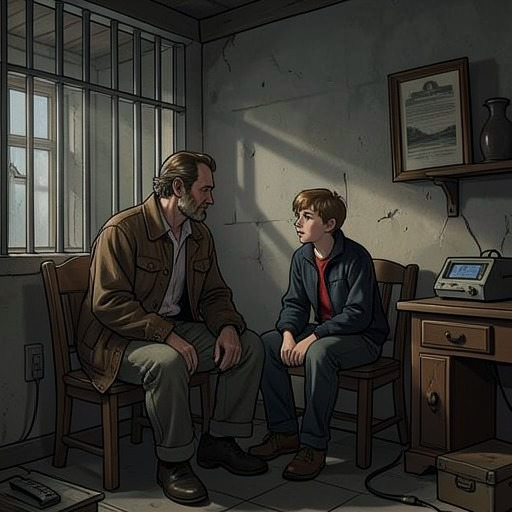
Tish gives birth
If Beale Street Could TalkTish gives birth at the culmination of a pregnancy lived under pressure: she must keep working, worries about getting through crowded streets and public transit as she grows heavier, and fears what providing for the baby may require if Fonny does not come home. The birth is rendered not as a detailed medical scene but as a threshold: Tish waits, loses her breath, and then the child’s insistent cry enters the narrative.
Pregnancy and the Approach of Labor
Earlier, Tish rises after a nearly sleepless night and goes to work despite her exhaustion. Walking through streets crowded with people and piled-up garbage, she considers how she might support the child if Fonny is still away when the baby comes. The thought is frightening enough that she cannot yet face what lies beneath it.
On the subway, her anxiety becomes physical. She worries that, as she grows heavier and sicker, she might pass out in the packed car and be trampled with the baby. She grips the pole and reminds herself that Fonny is counting on her to bring the child safely into the world. The commute makes pregnancy inseparable from her need to keep earning and from the conditions of crowded public life.
The Moment Labor Begins
Near the end, Tish is so tired that she can hardly speak. She sits watching the sky, unable to move, with the sense that something is about to happen; all she can do is wait. The scene holds her at the edge of change without explaining what she feels in advance or turning the birth into a clinical account.
Sharon tells her that Ernestine may have the rest of the money, obtained through an actress. Before Tish can respond, the doorbell rings. Joseph comes in and reports that Frank has been found far upriver in the woods, sitting in his locked car with the motor running. The news interrupts the family’s conversation, but the narrative does not say that it causes Tish’s labor.
The Child’s Arrival
After Joseph sits down, Sharon asks Tish how she feels. Tish opens her mouth to answer but cannot catch her breath. In that instant, everything else disappears from her awareness; she sees her mother’s eyes, then sees Fonny. She screams, and understands that her time has come.
The account then cuts to Fonny working with wood and stone, whistling and smiling. From far away, the baby cries repeatedly, the sound growing nearer. The passage does not identify the child’s sex or describe the mechanics of the birth; it makes the cry itself the decisive confirmation that the baby has arrived.
Narrative Significance
The scene brings the long uncertainty of pregnancy to a physical turning point. Before labor, Tish’s thoughts move between the baby’s safety, her own capacity to keep working, and the possibility that she may have to find another means of supporting the family. At the climax, those practical fears give way to breathlessness, recognition, and the child’s cry.
The contrast between Tish’s sudden labor and the image of Fonny at work preserves the family’s separation within the moment of arrival. The baby’s voice crosses that distance in the closing image, joining the child’s beginning to the life Tish and Fonny have been trying to sustain. The book then gives the date Columbus Day, October 12, 1973, followed by St. Paul de Vence; these closing markers frame the ending but do not establish the place or date of the birth itself.